Have you ever looked at a bowl filled with rice, pasta, lentils, crispy onions, and spicy tomato sauce and thought, “Who came up with this?” Well, Egypt did, and honestly, they deserve a standing ovation.
This Koshari Recipe combines simple pantry staples into one of the most satisfying meals you’ll ever eat. It sounds unusual at first, but one bite changes everything.
I still remember my first attempt at making koshari. I expected a decent meal. Instead, I ended up going back for three servings. My self-control packed its bags and left the kitchen.
If you love hearty comfort food with bold flavors, this dish belongs on your table.
What Is Koshari?
Koshari, sometimes spelled Kushari, ranks among the most popular street foods in Egypt.
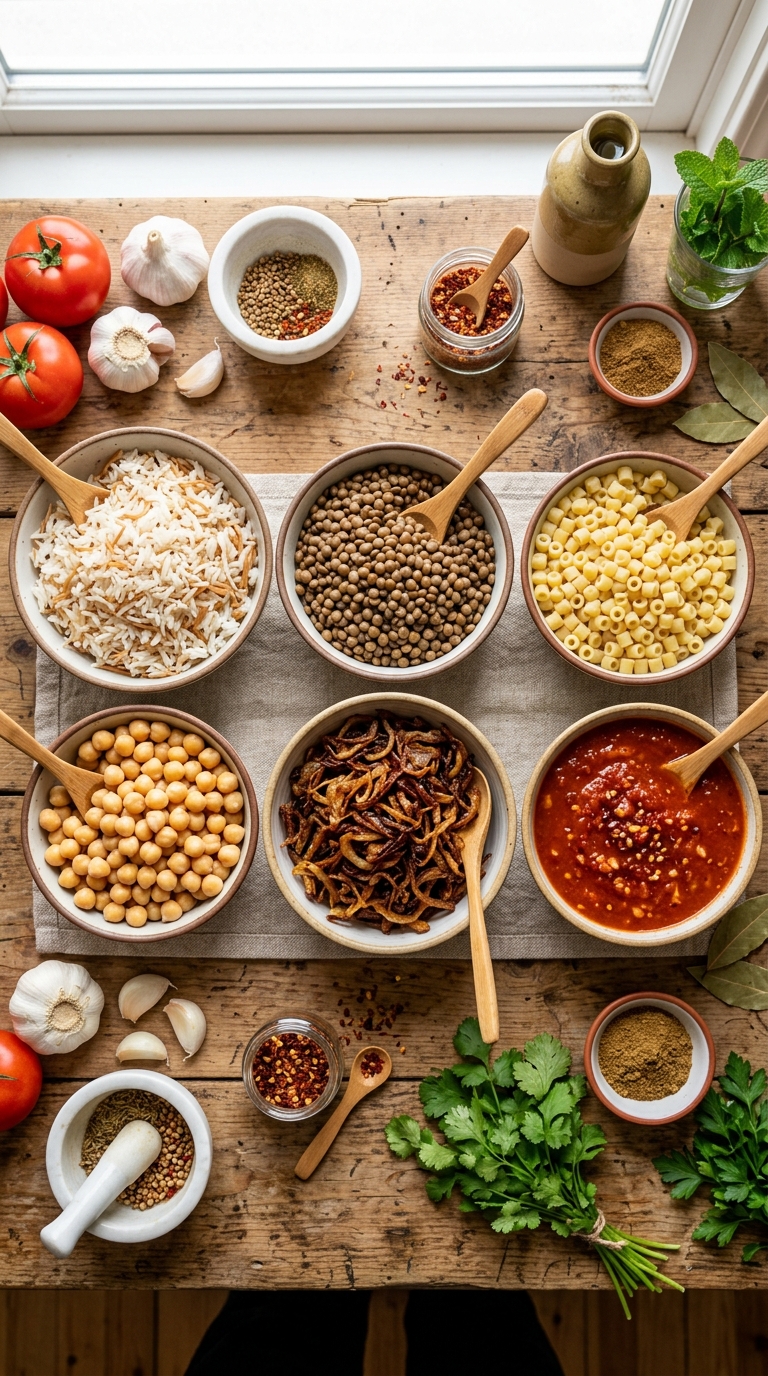
The dish combines rice, brown lentils, pasta, chickpeas, crispy fried onions, and a tangy tomato sauce. Many people also add a spicy garlic vinegar sauce for extra flavor.
The magic comes from layering different textures and tastes.
You get:
- Soft rice
- Tender lentils
- Chewy pasta
- Crunchy onions
- Rich tomato sauce
- Hearty chickpeas
Sounds like a lot, right? Somehow every ingredient works perfectly together.
Why This Koshari Recipe Egyptian Food Favorite Stands Out
Many traditional dishes rely on expensive ingredients.
Koshari takes a completely different path.
It uses affordable pantry staples and transforms them into something unforgettable.
That’s one reason why Koshari Recipe Egyptian Food searches continue growing worldwide.
People want delicious meals without spending a fortune.
Budget-Friendly
Most ingredients already sit in your kitchen.
Rice, lentils, pasta, onions, and canned chickpeas don’t exactly require a treasure hunt.
Naturally Filling
One bowl can keep you satisfied for hours.
The combination of carbohydrates, fiber, and plant protein creates an incredibly hearty meal.
Packed With Flavor
The tomato sauce brings acidity.
The garlic adds depth.
The onions add sweetness and crunch.
Every bite delivers something interesting.
Servings and Preparation Time
Before you start cooking, let’s cover the basics.
Servings: 6 people
Preparation Time: 25 minutes
Cooking Time: 50 minutes
Total Time: 1 hour 15 minutes
Ingredients
For the Rice and Lentils
- 1 cup brown lentils
- 1 cup long-grain rice
- 3 cups water
- 1 teaspoon salt
- 1 tablespoon olive oil
For the Pasta
- 1 cup elbow macaroni
- Water for boiling
- ½ teaspoon salt
For the Tomato Sauce
- 2 tablespoons olive oil
- 4 garlic cloves, minced
- 1 large onion, finely chopped
- 2 cups tomato puree
- 2 tablespoons tomato paste
- 1 teaspoon cumin
- 1 teaspoon paprika
- ½ teaspoon black pepper
- 1 teaspoon salt
- 1 tablespoon white vinegar
For the Crispy Onions
- 3 large onions, thinly sliced
- 2 cups vegetable oil for frying
For Assembly
- 1 can chickpeas (15 ounces), drained
- Extra crispy onions
- Extra sauce
Understanding the Key Ingredients
Every ingredient contributes something important.
Remove one component, and the dish loses part of its character.
Lentils
Brown lentils provide protein and texture.
They hold their shape during cooking, which makes them perfect for koshari.
Rice
Rice creates the foundation.
It absorbs flavors beautifully and balances stronger ingredients.
Pasta
Some people feel surprised when they see pasta mixed with rice.
Trust me, I had the same reaction.
Then I tasted it and stopped asking questions.
Chickpeas
Chickpeas add extra protein and heartiness.
They also make the dish more satisfying.
Crispy Fried Onions
These onions deserve their own fan club.
They add crunch, sweetness, and incredible flavor.
In my opinion, the onions can make or break a koshari recipe.
How to Make Koshari Recipe Step by Step
Step 1: Wash the Lentils
Place the lentils in a bowl.
Rinse them several times under cold water.
Remove any debris or damaged lentils.
Clean lentils cook more evenly and taste better.
Step 2: Cook the Lentils
Add lentils to a medium pot.
Pour in enough water to cover them by several inches.
Bring everything to a boil.
Reduce the heat and simmer for about 20 minutes.
The lentils should become tender but not mushy.
Drain them and set them aside.
Step 3: Prepare the Rice
Wash the rice until the water runs mostly clear.
This step removes excess starch.
Less starch means fluffier rice.
Nobody wants sticky rice here.
Well, maybe somebody does, but this recipe doesn’t.
Step 4: Cook the Rice and Lentils Together
Heat olive oil in a large pot.
Add the rice and cooked lentils.
Stir gently for two minutes.
Pour in water and add salt.
Bring the mixture to a boil.
Reduce the heat to low.
Cover the pot and cook for about 20 minutes.
Keep the lid closed during cooking.
Opening it every few minutes won’t help. Curiosity and rice rarely cooperate.
Step 5: Fluff and Rest
Turn off the heat.
Let the rice mixture rest for 10 minutes.
Use a fork to fluff everything gently.
The grains should separate easily.
The lentils should remain intact.
At this stage, your kitchen already starts smelling amazing.
Step 6: Cook the Pasta
Fill a large pot with water.
Add salt and bring the water to a boil.
Add the macaroni.
Cook according to package instructions until al dente.
Drain the pasta.
Rinse briefly with cool water.
Set it aside while you prepare the remaining components.
Step 7: Slice the Onions
Take three large onions.
Slice them into thin, even strips.
Try to keep the slices consistent.
Uniform slices fry more evenly and produce better results.
This step takes a little patience, but the payoff is worth it.
Step 8: Fry the Onions
Heat vegetable oil in a deep skillet.
Add onion slices in batches.
Avoid overcrowding the pan.
Cook until the onions turn deep golden brown.
Stir occasionally for even coloring.
Watch them carefully.
They move from perfect to burnt faster than a social media trend disappears.
Transfer the onions to paper towels.
Allow them to cool completely.
They become even crispier as they cool.
Step 9: Start the Tomato Sauce
Place a saucepan over medium heat.
Add olive oil.
Add chopped onions and cook until soft.
Stir frequently to prevent sticking.
Cook for about five minutes.
The onions should become translucent and fragrant.
Step 10: Add Garlic and Seasonings
Add minced garlic.
Cook for one minute.
Stir constantly.
Garlic burns quickly and nobody enjoys bitter sauce.
Add cumin, paprika, black pepper, and salt.
Mix everything thoroughly.
The spices should coat the onions evenly.
Step 11: Build the Sauce
Add tomato puree and tomato paste.
Stir until smooth.
Pour in the vinegar.
Mix well.
Bring the sauce to a gentle simmer.
Cook for 20 minutes.
The sauce should thicken noticeably.
The flavors should become rich and concentrated.
Step 12: Taste and Adjust
Taste the sauce carefully.
Add more salt if needed.
Add a little extra vinegar if you prefer more tanginess.
The sauce should taste bold because the rice and pasta will mellow the flavor later.
Step 13: Warm the Chickpeas
Drain and rinse the chickpeas.
Place them in a small saucepan with a few tablespoons of water.
Warm them over low heat for about five minutes.
You can also microwave them if you’re short on time.
Step 14: Prepare for Assembly
Now comes the fun part.
Gather all components on your counter.
You should have:
- Rice and lentil mixture
- Cooked pasta
- Tomato sauce
- Warm chickpeas
- Crispy onions
Each layer contributes something important.
Step 15: Build the Perfect Bowl
Start with a generous layer of rice and lentils.
Add a layer of pasta.
Spoon chickpeas over the top.
Pour tomato sauce generously across everything.
Finish with a large handful of crispy onions.
Don’t be shy with the onions.
They are the crown jewel of this dish.
Step 16: Serve Immediately
Serve the koshari while it’s warm.
The contrast between crispy onions and soft grains tastes incredible.
Every bite delivers a mix of textures and flavors.
That’s exactly what makes this recipe special.
Tips for the Best Koshari Recipe
Small details can transform a good dish into a great one.
Use Fresh Spices
Fresh spices deliver stronger flavor.
Old spices often taste dull and lifeless.
Check your spice cabinet before cooking.
Don’t Overcook Lentils
Cook lentils until tender.
Avoid mushy lentils.
The finished dish needs texture.
Fry Onions Properly
Golden brown onions create the best flavor.
Lightly cooked onions won’t provide enough crunch.
Dark brown onions can taste bitter.
Aim for a rich golden color.
Let Components Rest
Allow the rice to rest after cooking.
This simple step improves texture significantly.
Layer Instead of Mixing
Many home cooks mix everything together.
I prefer layering.
Layering keeps every texture distinct and exciting.
Why Koshari Became Egypt’s National Dish
Have you ever wondered why Egyptians love koshari so much?
The answer is simple.
The dish combines affordability, flavor, and satisfaction.
Workers, students, families, and food lovers all enjoy it.
Street vendors sell it across Egypt every day.
Restaurants serve their own versions.
Home cooks pass recipes down through generations.
That’s impressive for a meal made from humble pantry staples.
Koshari Variations You Can Try
Traditional recipes always deserve respect.
Still, experimenting can be fun.
Spicy Koshari
Add:
- Chili flakes
- Hot sauce
- Fresh chili peppers
The extra heat works beautifully with the tomato sauce.
Extra Protein Version
Add:
- Grilled chicken
- Ground beef
- Seasoned lamb
Traditional koshari stays vegetarian, but many people enjoy protein-rich variations.
Whole Grain Version
Replace white rice with brown rice.
Use whole wheat pasta.
The texture changes slightly, but the dish remains delicious.
Comparing Koshari With Other Popular Dishes
Food lovers often compare koshari with dishes from different cultures.
Each recipe offers something unique.
Koshari vs Haleem Recipe
A Haleem Recipe creates a thick, slow-cooked porridge-like meal.
Koshari focuses on layers and texture.
Haleem feels smooth and rich.
Koshari feels hearty and varied.
Both dishes provide comfort food at its best.
Koshari vs Hareesa Recipe
A traditional Hareesa Recipe uses wheat and meat to create a creamy consistency.
Koshari relies on separate ingredients working together.
I enjoy both, but koshari wins whenever I crave texture.
Koshari vs Kaleji Recipe
A Kaleji Recipe highlights liver and strong savory flavors.
Koshari delivers a vegetarian-friendly option packed with satisfying ingredients.
Each dish serves a different purpose.
Koshari vs Khaman Recipe
A Khaman Recipe produces a soft, fluffy snack.
Koshari functions as a complete meal.
One works perfectly for tea time.
The other handles lunch or dinner effortlessly.
Koshari vs Mathari Recipe
A Mathari Recipe creates a crunchy snack.
Koshari offers a filling main course.
Both provide excellent texture, but they satisfy different cravings.
Related Dishes You May Enjoy
If you enjoy koshari, several other recipes might catch your attention.
Knafeh Recipe
A Knafeh Recipe delivers a sweet dessert experience.
The crispy pastry and creamy filling create a fantastic contrast.
Many people enjoy knafeh after a hearty meal.
Kourabiedes Recipe
A Kourabiedes Recipe features buttery cookies coated with powdered sugar.
These treats pair wonderfully with tea or coffee.
Khoya Recipe Desserts
Many traditional desserts use Khoya Recipe techniques.
Khoya adds richness and depth to sweets across South Asia and the Middle East.
Kosher Food and Koshari
People occasionally confuse koshari with Kosher Food because of the similar spelling.
The two terms mean different things.
Koshari refers to the Egyptian dish.
Kosher food follows specific dietary guidelines.
Common Mistakes to Avoid
Even simple recipes can go wrong.
Avoid these mistakes for the best results.
Using Mushy Lentils
Overcooked lentils ruin texture.
Cook them until tender only.
Burning Garlic
Burnt garlic creates bitterness.
Cook it briefly and carefully.
Skipping Crispy Onions
Please don’t skip the onions.
Seriously.
The dish loses much of its character without them.
Underseasoning the Sauce
The sauce carries much of the flavor.
Season it confidently.
Taste as you cook.
Storage and Reheating
Koshari stores surprisingly well.
Refrigerator Storage
Place leftovers in airtight containers.
Store them for up to four days.
Keep sauce separate when possible.
Freezer Storage
Freeze rice, lentils, and sauce separately.
Use within three months for best quality.
Reheating
Warm the rice mixture in a skillet or microwave.
Heat the sauce separately.
Add fresh crispy onions before serving.
This approach keeps the texture enjoyable.
Nutritional Information
Approximate values per serving:
- Calories: 520
- Protein: 16g
- Carbohydrates: 82g
- Fat: 12g
- Fiber: 12g
- Sodium: 620mg
Values vary based on ingredient brands and serving sizes.

Best Koshari Recipe for Family Dinners
6
servings25
minutes50
minutes520
kcalKoshari is Egypt’s famous comfort food made with rice, lentils, pasta, chickpeas, crispy fried onions, and rich tomato sauce. This hearty vegetarian meal delivers incredible texture and flavor in every bite. It works perfectly for family dinners, meal prep, or anyone craving a filling and affordable dish.
Ingredients
For the Rice and Lentils
1 cup brown lentils
1 cup long-grain rice
3 cups water
1 teaspoon salt
1 tablespoon olive oil
For the Pasta
1 cup elbow macaroni
Water for boiling
½ teaspoon salt
For the Tomato Sauce
2 tablespoons olive oil
4 garlic cloves, minced
1 large onion, finely chopped
2 cups tomato puree
2 tablespoons tomato paste
1 teaspoon cumin
1 teaspoon paprika
½ teaspoon black pepper
1 teaspoon salt
1 tablespoon white vinegar
For the Crispy Onions
3 large onions, thinly sliced
2 cups vegetable oil for frying
For Assembly
1 can chickpeas (15 ounces), drained
Extra crispy onions
Extra sauce
Directions
- Rinse and cook lentils.
- Wash and prepare rice.
- Cook rice with lentils.
- Boil pasta until al dente.
- Slice onions thinly.
- Fry onions until crispy.
- Prepare tomato sauce.
- Warm chickpeas.
- Layer rice and lentils.
- Add pasta.
- Add chickpeas.
- Pour tomato sauce.
- Top with crispy onions.
- Serve warm.
Frequently Asked Questions
1. What does koshari taste like?
Koshari tastes savory, tangy, slightly spicy, and deeply comforting. The crispy onions add sweetness while the tomato sauce delivers bold flavor.
2. Can I make koshari ahead of time?
Yes. Prepare the components one day ahead. Store them separately and assemble before serving.
3. Is koshari vegetarian?
Traditional koshari is vegetarian. It contains rice, lentils, pasta, chickpeas, onions, and tomato sauce.
4. Can I freeze koshari?
Yes. Freeze the rice mixture and sauce separately for the best results.
5. Which lentils work best?
Brown lentils work best because they hold their shape during cooking.
6. Why does koshari contain pasta and rice together?
The combination creates the signature texture and heartiness that make koshari unique.
7. Can I make koshari spicy?
Absolutely. Add chili flakes, hot sauce, or fresh peppers to increase heat.
Conclusion
This Koshari Recipe proves that simple ingredients can create extraordinary results.
Rice, lentils, pasta, chickpeas, sauce, and onions don’t sound revolutionary on their own. Together, they create one of the most beloved meals in Egyptian cuisine.
The recipe requires a little effort, but every layer rewards that effort. IMO, few comfort foods deliver this much flavor while staying budget-friendly.
Next time you need a hearty meal, skip the boring dinner routine and make koshari instead. Your taste buds will thank you, and your pantry will probably feel pretty proud too 🙂